Pages

Showing posts with label hand-loom. Show all posts

Wednesday, April 8, 2020

The Majestic Manipur


The Majestic Manipur

Through Moirang roads, I discovered Manipur in a new dimension. INA or Indian National Army led by Netaji Subhash Chandra Bose hoisted the Indian flag in 1944 much before Indian Independence.
The Acknowledgement 

Netaji is a much celebrated figure in this land. Each year this day is marked with respect and glory in Manipur.

Apart from this, the place has many things to offer. One major thing is the colorful textiles of Manipur. The unique textiles are often woven by Manipuri females in basic handloom using colorful yarns bringing out the enticing beauty of these textiles.

I would now talk about three of my favorite  textiles of Manipur which till date mesmerizes me with its wonderful color and artistic skills. First is the Sangai motif found in the textiles of Manipur, Second is the Moirangphi textile and third the most astonishing one is the use of orchids motifs from  the state Manipur 

Sangai: Sangai is the state animal of Manipur. This deer is an endangered and rare species and found in Manipur in their natural habitat. The Sangai deer is often seen as a textile motif in various fabrics of Manipur. The fighting spirit of the dancing deer are captured in its true sense in the jamdani motifs of Manipur. The wildness is tamed in the framed form of warp and weft of Manipuri textile. The majestic forms of the Sangai deer motifs not only praise the tribes’ gratitude towards nature but also tells tales of legend and bravery taking shape in textile art.
The Sangai Deer in the making
The dancing deer come alive
The Temple Motif:
In my several visits to this beautiful state of North East of India, I have come across this Moirangphi textiles. In Meitei language (the local language of Manipur) Phi is a term for fabrics or a piece of fabric. And these phis woven in the place in Moirang is called as Moirangphi. The Moirangphis are used in several ways. Either as a sarong or a phanek which is wrapped around their lower body or as a saree. This particular piece has delicate temples running throughout the edges of the fabrics. These temples resembles the temple structure which is conical in feature. The Moirangphi with temple motifs comes in soft pastel colors and have air like pristine texture. The fabric itself makes it look pious and breezy which shows the extreme devotion of the women weavers who have expressed their prayer through this textile.
The making of temple motif and jamdani florals.
The Temple Motif 
The land of Orchids: The state of Manipur is known for its flora and fauna. The state has designated land for orchid plants and has 220 species pf orchids. The beautiful orchids are exported to Far East Asia from Manipur. The motifs of orchids are given life on the transparent fabrics through jamdani or extra weft technique added with imaginations of weavers. The supple and light fabrics are rendered through weave and color shading such a way that it makes the floral motifs three dimensional and lively. Due to high skill involved to do this particular motif, very few women weavers are left whose nimble fingers weave this magic. The rendering of colors are so important to bring life to a flat motif, the visual skill is also required for the magic to happen. Subtle pastel colors are often seen used for this motifs. As I have already mentioned that this jamdani orchid motifs require high skill of not only of hands but vision also, there is a dwindling number of weavers who are efficient enough to weave.
The hands that wove these impeccable orchids: Ms. Saya Devi Wangkhei


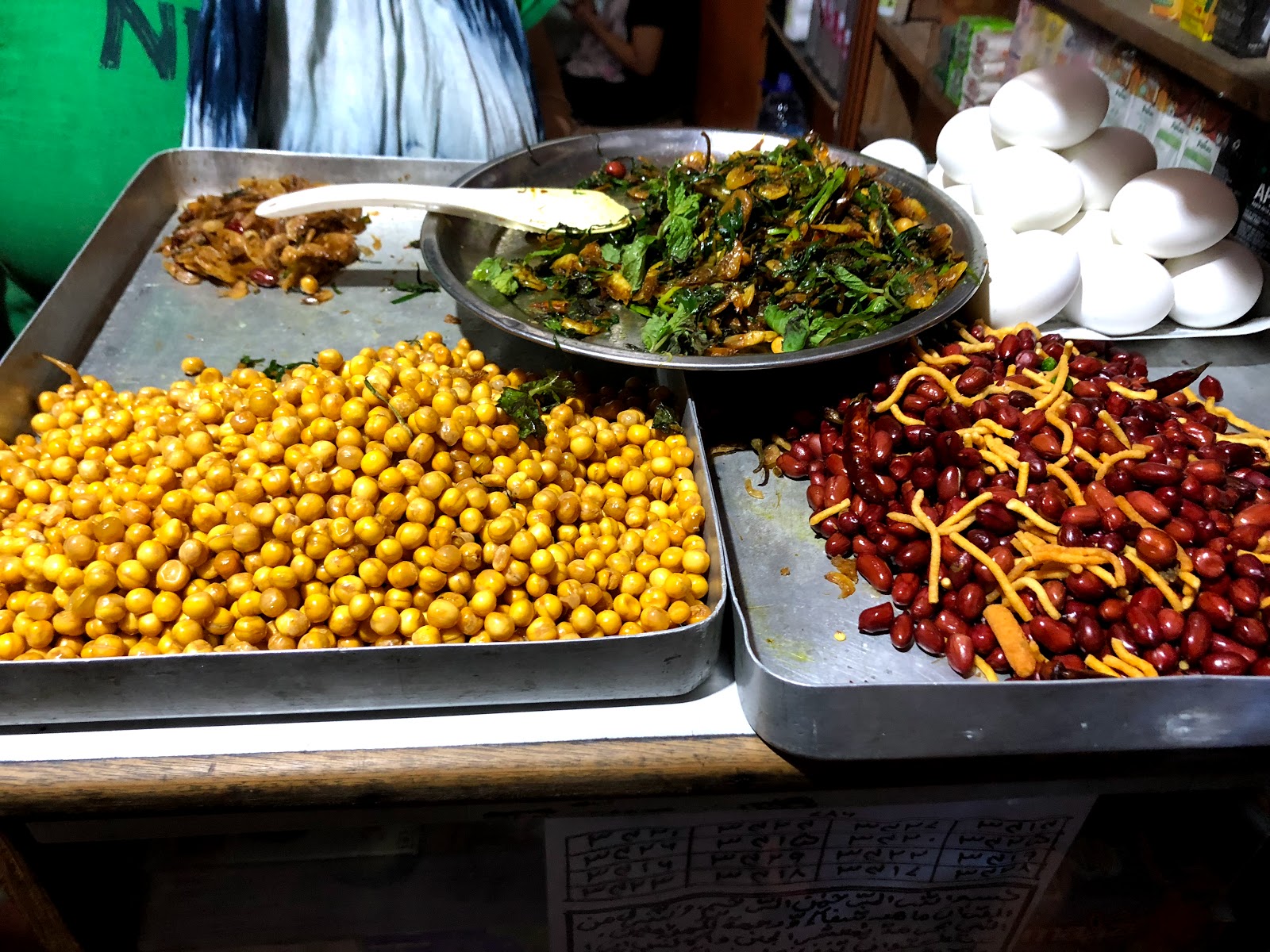
 The journey of Manipur is never complete with the delectable food trail through the streets of Imphal. So one can hit the small shanties in Polo Ground for ethnic and local taste. Spoiler alert, be prepared for pungent smell and non veg food. But these taste will linger in your senses and believe me the cravings grow more. One can venture the evenings strolling the streets of Imphal near the Kangla fort. Whenever hunger pangs hits you visit the nearby paan stores where you can find shrimp and peanut fries.


Ending here for the time being, Manipur has many folds to be unfolded. The journey has just begun. The tensed and peaceful days are yet to be explored.

Wednesday, April 1, 2015

Sualkuchi Silks

Sualkuchi is almost an hour long journey from Guwahati, the capital of Assam. This place is known for handloom weaving cluster where weavers are engaged in traditional method of silk weaving. After a scenic journey over the mighty river of Brahmaputra, Sualkuchi cluster welcomes you with open arms with varied offerings. Perhaps the ser-iculture of Assam has gradually evolved this place as silk weaving cluster. Muga weaving was primarily focused but due to scarcity of Muga yarns the exercise has dwindled. Muga fabrics is called golden fabric for their golden glow.


The typical silk weaving of this place is mainly associated with the Assamese traditional attire like Mekhla Chadar and Sarees. Though being a silk weaving cluster, Sualkuchi has become very commercialized with hybrid multibrand stores popping up at Sualkuchi and polluting the essence of hand loom cluster.

Still Sualkuchi has few weavers who offer wonders in silk weaving. The motifs used in mekhla chadar and saree are mainly inspired from Assamese traditional, folk and tribal motifs. One can see Jaapi (tribal Assamese hat), Rhinos, Peacock, Half Moon etc. The transcendent art of silk weaving in Sualkuchi region was primarily in Jaala technique which involved multiple pedals and weft weaving on the loom. But today it has got replaced by jacquard which is much more faster and cost effective which has somehow made the motifs much uniform and flat in nature giving a very run of the mill feel. The weavers of Sualkuchi mainly focus on few colors only comprising of beige or muga color, maroon, steel grey, black, yellow, royal blue and green.


What is unique about Sualkuchi Silk Weaving is that the borders are separately woven and then stitched to the main base of the fabric of Mekhla or Saree. Even the pallu edge of a Saree or Chadar is finely hand crafted with yarn pompoms.
So one can stop by at Sualkuchi to buy handful of these silk crafts for any day trip from Guawahati.
#fondhand

Thursday, February 19, 2015

Begampuri Saree

Begampuri Saree

I happened to visit Begampur a few days back. What surprised me is that inside the quaint hamlet, lies a traditional weaving community. This place is hardly 40 Kms from Calcutta. Though the technique  of these weaves are very simple handloom but the placement of color blocking, use of jala and contrast borders make them very fashionable.
This weaving cluster originally consisted of 10000 weavers which have now reduced to 500 only. Prakash Das one of the stalwart weaver of this town is trying hard to keep this handloom cluster from dwindling. Powerloom has taken place of this handwoven magic. with a minimum wage of 250/- to 300/- per day these weaving community is creating magic each day. I acme to know from Prakash that Ashapurna Devi one of the noted author belonged this town.
 Above image shows a dyer working with yarns and vegetable dye.
Rope making, machine embroidery and power loom have replaced this traditional frame work weaving.
One surprise package which I got to know is that Vishwakarma Puja is celebrated during the end  of December unlike September for rest of India. I wish Prakash Das gets a lot of noble promoters for his constant endeavoring activity to keep this weaving community alive and sustainable. #fondhand